
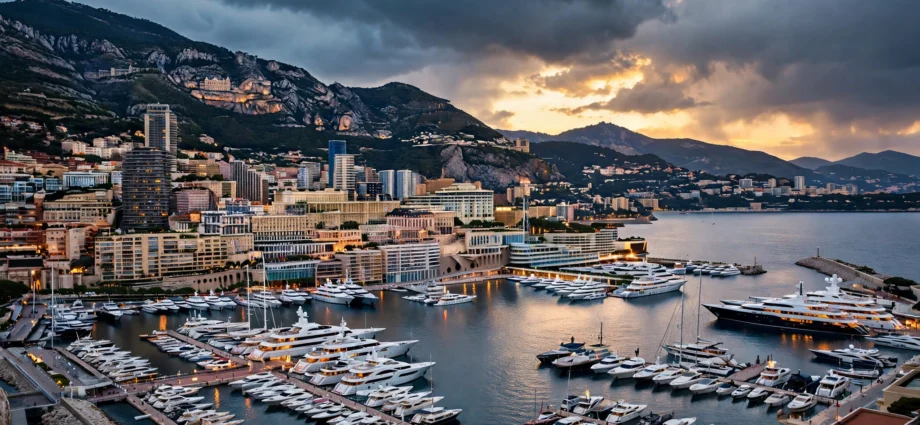
Monaco combines one of the most expensive property markets in the world with one of the most discretionary residency systems in Europe. For overseas buyers, the two are closely connected: a Monaco address is a condition of residency, and the property you choose shapes the strength of your application. But buying a home does not automatically make you a resident.
This guide explains the residency requirements for non-resident property buyers in plain terms: the financial self-sufficiency rule and the bank deposit convention, the accommodation requirement and how buying compares with renting, the stages of the Carte de Sejour application, Monaco’s tax position, and the important distinction between residency and citizenship.
In short: Monaco grants residency to non-residents who prove financial self-sufficiency, hold a Monaco address through purchase or a twelve-month lease, show a clean criminal record, and pass an interview with the Residents Section. The established convention is a EUR 500,000 deposit with a Monaco-licensed bank, though no statutory minimum exists. Successful applicants receive a Carte de Sejour Temporaire, renewable annually.
How Monaco residency works: the key principles
Monaco does not run a residency-by-investment programme in the style of Portugal’s old golden visa or Malta’s citizenship schemes. There is no qualifying investment threshold that guarantees approval. Instead, the Principality applies an “independent means” model: residency is available to people of demonstrably good character who can support themselves in Monaco without working locally, and the government decides on each case at its discretion.
Four conditions sit at the centre of every application, regardless of nationality:
- Proof of financial self-sufficiency, usually through a deposit with a Monaco bank.
- Proof of accommodation in Monaco, by purchase or by a long-term lease.
- A clean criminal record, verified in Monaco’s own checks.
- An in-person interview with the Residents Section of the Monaco police (Direction de la Surete Publique).
Non-EU and non-EEA nationals face one additional step: a French long-stay visa. Monaco issues no entry visas itself, so these applicants must obtain a French Type D visa from the French embassy or consulate in their country of residence before applying for the Monaco residence permit. The Type D process is run by France and typically takes four to eight weeks.
The financial requirement: bank deposit and self-sufficiency
This is the gating criterion of the Monaco residency application. The Principality wants residents who will support themselves comfortably, and the standard way to demonstrate that capacity is to place funds with a Monaco-licensed bank, which then issues a formal attestation (attestation bancaire) confirming your financial capacity to the Residents Section.
How much do you need to deposit?
The market convention is a deposit of EUR 500,000 with a Monaco-licensed bank for a principal applicant. This figure is consistently reported across investment-migration sources, and some banks apply it as a practical floor for opening the account that supports the application.
Three important qualifications apply. First, there is no published statutory minimum: the convention is a matter of banking practice and administrative expectation rather than a figure written into a published threshold. Second, several Monaco private banks now ask for EUR 1 million or more in practice, depending on the applicant’s profile and family size. Third, the deposit remains your own money, held in your personal account; it is not a fee and it is not paid to the state.
The deposit must remain in place throughout your residency period, since it serves as proof of ongoing financial capacity at each renewal. Banks conduct extensive source-of-funds due diligence, which industry reports say has tightened as application volumes have risen, so allow two to six weeks for account opening once compliance review begins.
Alternatives to the bank deposit
A deposit is the most common route, but it is not the only one. The financial requirement can also be satisfied through local employment with a verified Monaco contract, self-employment with documented income, stable retirement or investment income covering the Monegasque cost of living, family reunification, or a financial sponsorship pledge from a Monaco-resident spouse, parent or partner.
Buying vs renting: the accommodation requirement
Every applicant must hold a registered address in Monaco that is proportionate to the household. The accommodation must be genuine: renting a small studio while claiming to relocate a family of five will not satisfy the authorities. Three forms of accommodation qualify:
- Owned property, proven with a purchase deed.
- A long-term lease, with a minimum twelve-month rental contract.
- A hosting arrangement, living with a spouse or close relative who is already resident, with their formal authorisation.
Short-term rentals, holiday lets and serviced apartments used casually do not qualify. The dwelling must be your declared primary address.
Purchasing property is not required for residency, and buying alone does not qualify you for residency by itself. It does, however, strengthen an application by demonstrating economic ties and financial capacity, and many applicants prefer the certainty of ownership in a market where rental stock is tight and expensive.
Unlike some European jurisdictions, Monaco places no general restriction on foreigners buying residential property. For context on how this compares with regulated neighbours, Switzerland limits non-resident purchases through its Lex Koller rules, while Monaco allows overseas buyers to purchase freely, which is one reason the accommodation requirement is often met by acquisition rather than lease. The broader direction of the luxury property market also matters when timing a purchase, because prices per square metre in the Principality remain among the highest recorded anywhere in the world.
The Carte de Sejour: application stages and card categories
The application is made in person to the Residents Section. The standard stages are: secure your accommodation and bank attestation first, then submit the application with your documents (passport, birth certificate, marriage certificate if applicable, police clearance certificates, bank attestation, proof of accommodation, health insurance, and for non-EU nationals the French Type D visa), then attend the interview, where you confirm your intention to live in Monaco and answer questions about your circumstances. The full process, from securing accommodation to issuance of the card, typically takes three to six months for renters and longer where a property purchase is involved.
Residency progresses through categories as genuine residence accumulates. Transitions are not automatic: you apply at each step and the authorities reassess your situation.
| Card type | Validity | Eligibility | Issue fee | Renewal fee |
|---|---|---|---|---|
| Carte de Sejour Temporaire | 1 year, renewable | First-time applicants; the entry point for new residents | EUR 80 | EUR 40 |
| Carte de Sejour Ordinaire | 3 years, renewable | After three years of continuous residence | EUR 100 | EUR 50 |
| Carte de Sejour Privilegiee | 10 years, renewable indefinitely | After ten years of genuine residence | EUR 160 | EUR 80 |
| Carte Conjoint de Monegasque | Indefinite | Foreign spouses of Monegasque nationals | EUR 80 | EUR 40 |
Family members are not covered by one card: a spouse and dependent children generally need their own applications, and the financial requirement scales with the size of the family. Some banks ask for a higher deposit where dependants are included.
Genuine residence: what the authorities expect
Monaco law does not publish a single statutory number of days you must spend in the Principality, but the expectation is clear: the authorities want evidence of genuine residence, such as utility bills, rental payments, local spending and regular physical presence. Extended absence raises questions at renewal and can lead to the permit not being renewed. The practical test is whether your life, spending and presence genuinely centre on Monaco, so plan your calendar accordingly rather than relying on a day count.
Monaco’s tax position for residents
Monaco’s tax regime is the single biggest reason many overseas buyers consider residency. For individuals, the Principality levies:
- No personal income tax, in place since an ordinance of 1869.
- No wealth tax and no capital gains tax for individuals.
- No local property tax on residential property for individuals.
- No inheritance tax in the direct line between parents and children or between spouses.
Value added tax does apply, at a standard rate of 20 percent, and corporate tax applies to companies earning more than 25 percent of their turnover outside Monaco.
The important exception concerns French nationals. Under the Franco-Monegasque tax convention of 1963, French nationals who moved to Monaco after 1957 remain subject to French income tax as if they were domiciled in France. French nationals who were already established in Monaco before that date, and those born in Monaco and resident there since birth, are outside the scope of that rule. For everyone else, including British and other non-French nationals, Monaco’s zero personal income tax applies in full.
Two caveats for planning. First, Monaco joined the Common Reporting Standard for automatic exchange of financial account information in 2017, so the residency process involves standard tax-residence documentation when you open a Monaco bank account. Second, leaving another country does not automatically end your tax obligations there: the UK, for example, can keep former long-term residents within the scope of inheritance tax for years after departure, and rental income from property in your country of origin may remain taxable there. Always take coordinated tax advice in both jurisdictions before you move.
Residency vs citizenship: they are not the same thing
A Carte de Sejour is a residence permit. It lets you live in Monaco, travel freely within the Schengen area (though not settle in other Schengen states), and enjoy the tax position described above. It does not make you Monegasque, it does not give you a Monaco passport, and it does not give you voting rights.
Monegasque citizenship is a separate and far rarer status. Naturalisation requires at least ten years of continuous residence and is granted at the discretion of the Prince through a Sovereign Ordinance. Monaco does not allow dual nationality for naturalised citizens, so acquiring Monegasque citizenship generally means renouncing your existing citizenships. In practice, very few residents take this step, and the residency rights and tax position most buyers seek are available long before citizenship enters the picture.
A practical timeline for buyer-applicants
If you are buying property as part of your move, sequence the work so that the slower steps run first:
- Months 1 to 2: Decide on buying versus renting, and begin the Monaco bank account process, including source-of-funds documentation. Non-EU nationals should start the French Type D visa application in parallel.
- Months 2 to 4: Secure accommodation: sign a twelve-month lease or complete a property purchase. Obtain the bank attestation once funds are in place.
- Months 3 to 5: Gather police clearance certificates from every country where you have lived for more than six months in the past five years (each must be recent and translated into French where necessary), plus health insurance and civil status documents.
- Months 4 to 6: File the application with the Residents Section, attend the interview, and receive the Carte de Sejour Temporaire.
Frequently asked questions
Do I need to buy property to get Monaco residency?
No. A twelve-month lease qualifies just as a purchase does, and many first-time applicants rent while they learn the market. Buying is not a legal requirement, though it strengthens the application by demonstrating economic ties and long-term commitment to the Principality.
How much money do I need in a Monaco bank for residency?
The established convention is a deposit of EUR 500,000 with a Monaco-licensed bank for a principal applicant, though there is no published statutory minimum. In practice, several banks ask for EUR 1 million or more depending on the applicant’s profile and family size. The deposit remains your own money in your personal account and must stay in place throughout your residency.
How long does the Monaco residency application take?
The full process, from securing accommodation through to issuance of the Carte de Sejour Temporaire, typically takes three to six months when the applicant rents rather than purchases. Bank account opening takes two to six weeks once compliance review begins, and the security review takes a further four to eight weeks. Property purchases extend the timeline.
Do non-EU nationals need a French visa before applying?
Yes. Monaco issues no entry visas itself, so non-EU and non-EEA nationals must first obtain a French long-stay visa (Type D) from the French embassy or consulate in their country of residence before applying for the Monaco residence permit. The Type D process is run by France and typically takes four to eight weeks. EU and EEA citizens are exempt from this step.
Is there income tax in Monaco for residents?
There is no personal income tax for Monaco residents, a position in place since 1869, and no wealth tax, capital gains tax for individuals, or local property tax. The exception is French nationals who moved to Monaco after 1957, who remain subject to French income tax under the 1963 Franco-Monegasque tax convention. VAT applies at a standard rate of 20 percent.
Does Monaco residency lead to citizenship?
Not automatically. Residency and citizenship are separate: a Carte de Sejour lets you live in Monaco but does not make you Monegasque. Naturalisation requires at least ten years of continuous residence, is granted at the Prince’s discretion, and generally requires renouncing your other citizenships, since Monaco does not allow dual nationality for naturalised citizens.
Can my spouse and children be included in my residency?
Family members need their own applications and cards; there is no single family permit. A spouse and dependent children apply alongside the principal applicant, with accommodation sized proportionately to the household and the financial requirement scaled to the family size. Some banks ask for a higher deposit where dependants are included.
Please note: Monaco residency applications are assessed case by case and requirements can change. This guide is general information, not legal advice. Speak to a qualified adviser before making decisions.