
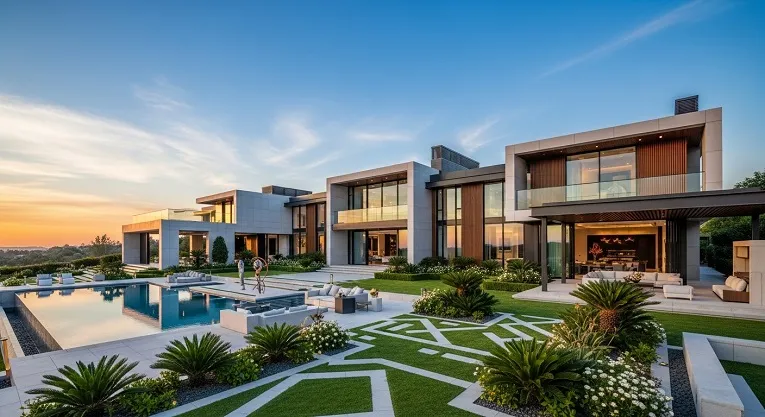
A luxury estate is a large private property, typically several acres or more, combining a substantial main residence with grounds, outbuildings and often additional amenities such as a lake, stable block or private woodland. In the UK, luxury estates are concentrated in areas such as the Cotswolds, Surrey, and parts of Scotland, alongside prime central London equivalents in the form of large freehold townhouses.
What Qualifies as a Luxury Estate in the UK
Estate agents generally use four markers to distinguish a luxury estate from a large family home: acreage, the presence of a formally listed or architecturally notable main house, additional structures such as a coach house, staff cottage or stable yard, and a level of privacy that comes from a private drive, walled boundary or significant surrounding land.
Many UK luxury estates also carry heritage value, with Grade I or Grade II listed status affecting both the buying process and any future renovation plans, since listed status brings planning restrictions that buyers need to understand before making an offer.
Key Features of a Luxury Estate
- Substantial acreage, ranging from a few acres around a country house to several hundred for larger sporting estates
- A main residence with historic or architectural significance, often combined with sympathetic modern renovation
- Additional buildings, such as a gate lodge, stable block, walled garden or staff accommodation
- Sporting or leisure rights, including shooting, fishing or equestrian facilities on larger rural estates
- Strong privacy, typically achieved through a long private drive, mature boundary planting or gated access
What Determines Price
Three factors influence UK luxury estate pricing more than any others. Location remains dominant, with estates within commuting distance of London or close to well regarded schools commanding a premium over more remote equivalents. Land quality and use matter too, since productive farmland, woodland with commercial timber value, or land with development potential all affect valuation differently. Finally, the condition of the main house has an outsized effect, as a listed building requiring significant restoration can sell well below an equivalent estate with a house already brought up to modern standards.
Buying a Luxury Estate: What to Expect
- Instruct a solicitor experienced in rural and estate transactions, since these purchases often involve overage clauses, sporting rights and boundary agreements that a standard residential conveyancer may not routinely handle.
- Commission a full structural survey, particularly for listed properties, where repair costs and permitted materials can differ significantly from a standard renovation.
- Check planning history and any restrictive covenants attached to the land, especially where outbuildings might be considered for conversion.
- Understand ongoing running costs, including grounds maintenance, heating a large historic property, and insurance, which is typically higher than for a standard home.
- Review financing options early. Our Mortgage and Property Plus guide explains the financing structures commonly used for high value UK property purchases.
How a UK Luxury Estate Compares Internationally
For a closer look at specific UK regions, our Best UK Areas for Luxury Estates guide covers Surrey’s private gated estates and the Cotswolds in detail. Buyers weighing a UK estate against options abroad may also find it useful to compare with the DACH property market. Our Luxus Immobilien Guide and Luxus Haus Guide cover equivalent property types in Germany, Austria and Switzerland, while our Luxury Property Insights article tracks how demand is shifting across London, Dubai, Monaco and Miami.
Frequently Asked Questions
What is the difference between a luxury estate and a luxury house?
A luxury estate includes substantial land and typically additional buildings alongside the main residence, while a luxury house refers to the dwelling itself, regardless of the surrounding acreage.
How many acres does a property need to be classed as an estate?
There is no fixed legal threshold, but UK agents generally start using the term estate once a property includes several acres of grounds alongside the main house, often combined with additional structures or land uses such as woodland or paddocks.
Do listed buildings affect the value of a luxury estate?
Yes, in both directions. Listed status can add heritage value and buyer appeal, but it also brings planning restrictions on renovation and can increase repair costs, which buyers should factor into their offer.
What ongoing costs should buyers expect with a luxury estate?
Beyond standard property costs, owners typically budget for grounds and land maintenance, higher buildings insurance, and in many cases dedicated staff for upkeep of larger gardens, stables or woodland.
Are luxury estates a good long term investment in the UK?
Prime rural and estate property has historically held value well over the long term, particularly close to London and other major economic centres, though as with any property purchase, returns depend on location, condition and market timing.
Written and reviewed by the My Luxury Property editorial team, who research premium property markets across the UK and Europe to help buyers compare locations, pricing and purchase routes before they commit. This article is for general information only and does not constitute advice; see our disclaimer for details. Have a question about buying a UK estate? Get in touch with us here.