
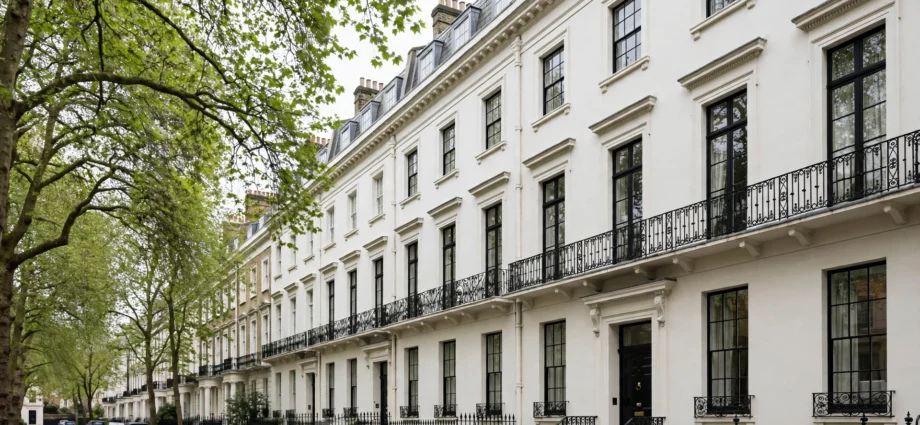
Lease Extension Cost on a Prime London Flat: Marriage Value, the 80-Year Line and What to Pay
A prime London flat is rarely bought for the bricks alone. It is bought for the address, the building, the floor, the light, and, quietly, for the number of years left on its lease. That number is a price tag in its own right. Two identical flats in the same mansion block, one with 120 years left and one with 68 years left, are not the same purchase. The second flat will cost less to buy and a great deal more to own properly, because at some point its lease must be extended, and the cost of that extension is where many prime buyers are caught out.
This guide explains what a lease extension costs at prime values, why the cost jumps so sharply below 80 years, how the statutory and informal routes differ, and what changes when the owner lives overseas. The premium figures below are illustrative planning bands, not valuations. Every real premium turns on a surveyor’s valuation of that flat, its ground rent, its lease terms and the market on the day. Your solicitor and surveyor’s written figures always govern your own case.
In brief: Under the rules currently in force, a qualifying leaseholder can extend a flat lease by 90 years at a peppercorn ground rent through the statutory route. Above 80 years remaining, no marriage value is payable and the premium is comparatively modest. Below 80 years, marriage value applies and the leaseholder pays half of it to the freeholder, which is why a premium can multiply as the term shortens. At prime values that single change is a six-figure event.
Why Lease Length Is a Price Tag on a Prime Flat
A lease is a wasting asset. Each year that passes, the leaseholder owns a slightly shorter right to live in the flat, and the freeholder’s right to get the property back moves slightly closer. On a lease with 150 or 999 years left, that arithmetic barely matters. The flat trades almost as if it were freehold, lenders are comfortable, and buyers rarely ask about the term beyond confirming it.
As the term shortens, three things change together. First, the flat’s market value falls relative to an equivalent long-lease flat, because a buyer is buying fewer years and inheriting a future extension bill. Second, lenders become cautious. Many will not lend, or will lend only on stricter terms, once the term falls below 80 years, and some draw the line higher. Third, the extension premium itself rises, and it rises fastest of all once marriage value enters the calculation.
That is why lease length belongs in the price negotiation, not in the small print after it. A buyer who pays a long-lease price for a short-lease flat has paid twice: once in the purchase price, and again in the extension premium. A buyer who understands the term can either negotiate the price down, require the seller to extend before completion, or extend immediately after purchase, when the two-year ownership qualifying period no longer applies. That two-year rule was abolished with effect from 31 January 2025, so a new owner can now start the statutory process straight away.
For the full purchase picture, read our guide to the total cost of buying a luxury property in the UK, which totals stamp duty, legal fees, surveys and the other costs that sit alongside any extension premium.
The 80-Year Line and Marriage Value
Marriage value is the additional value created by putting the two interests together. Before an extension, there is a leaseholder’s interest and a freeholder’s interest, each worth something on its own. After a 90-year extension at a peppercorn ground rent, the combined interest, the long lease, is worth more than the two separate interests added together. That uplift is the marriage value.
Under the Leasehold Reform, Housing and Urban Development Act 1993, where the lease has fewer than 80 years remaining when the statutory notice is served, the leaseholder pays 50 percent of the marriage value to the freeholder as part of the premium. Where more than 80 years remain, marriage value is nil. That is the cliff edge, and it is entirely a creature of the calendar. A lease at 81 years carries no marriage value. The same lease at 79 years does, and the premium jumps accordingly.
A simple illustration shows the scale. Take a flat whose long-lease value is £1 million. At 85 years remaining, with no marriage value, the premium is mainly the capitalised ground rent plus the loss to the freeholder from pushing the reversion 90 years further away, typically a comparatively modest sum. At 70 years, the surveyor must also value the marriage value, the difference between the flat’s value with a short lease and its value with a long lease, and half of that uplift is added to the premium. On a prime flat the uplift itself is large, because the gap between a short-lease value and a long-lease value is large, so half of it is large too.
There is one reform point that must not be misunderstood. The Leasehold and Freehold Reform Act 2024 was passed in May 2024 and includes provisions to abolish marriage value and to extend the statutory term for flats to 990 years. As of October 2026 those particular provisions are still not in force in practice, because they need secondary legislation and the new valuation rates, and they have been the subject of legal challenge. Under the rules currently in force, marriage value still applies below 80 years. A buyer who waits for abolition is gambling on a timetable nobody can guarantee, while the lease shortens by another year in the meantime. If abolition lands before you act, treat it as upside, not as the plan.
What an Extension Costs at £1m, £2m and £3m (Worked Examples)
No table can replace a valuation, but a prime buyer needs a sense of scale before instructing one. The bands below are illustrative planning figures for a flat with a low, fixed ground rent, assuming a standard statutory extension of 90 years at a peppercorn rent. They scale with value because marriage value and reversion value both scale with value. Ground rent, lease terms, the building, the location and the surveyor’s relativity graph, the curve that relates short-lease value to long-lease value, will move any real figure outside these bands.
| Long-lease value | Around 85 years left (no marriage value) | Around 70 years left (marriage value applies) | Around 60 years left (marriage value applies) |
|---|---|---|---|
| £1,000,000 | £10,000 to £25,000 | £70,000 to £110,000 | £120,000 to £180,000 |
| £2,000,000 | £20,000 to £50,000 | £140,000 to £220,000 | £240,000 to £360,000 |
| £3,000,000 | £30,000 to £75,000 | £210,000 to £330,000 | £360,000 to £540,000 |
Read the table in two ways. First, the jump from 85 years to 70 years is the marriage value effect, and it dwarfs the effect of the extra fifteen years of term alone. Second, the jump from £1 million to £3 million is roughly proportional, which is why generic online examples based on £250,000 or £300,000 flats mislead prime buyers so badly. A premium that looks manageable at an average price is a different order of magnitude at a prime price.
On top of the premium, budget for professional costs on both sides. Under the current statutory rules the leaseholder generally pays the freeholder’s reasonable valuation and legal costs as well as their own solicitor and surveyor. Allow several thousand pounds for your own team on a prime flat, and a similar order of magnitude for the freeholder’s reasonable costs, confirmed in writing before you serve notice. If the premium cannot be agreed, the First-tier Tribunal (Property Chamber) determines it, which adds time and cost, and missing a statutory deadline can force the whole process to restart after a waiting period. That is why specialist leasehold advice, not a general conveyancer alone, is the right instruction at this level.
Marriage Value Explained
Marriage value is not a penalty and it is not a fee for paperwork. It is the freeholder’s half share of the value created by the extension itself. The surveyor calculates it by comparing two totals: the leaseholder’s existing lease plus the freeholder’s interest before the extension, and the same two interests after it. The difference is the marriage value. The leaseholder keeps the other half, in the form of the uplift in their own flat’s value once the lease is long again.
Two consequences follow. First, marriage value is highest where the short lease has depressed the value most, which is why the discount for a short lease and the premium to cure it are two sides of the same calculation. Second, there is no way to avoid marriage value by choosing a different route once the term is below 80 years, except by negotiating an informal deal that prices it differently, which brings its own trade-offs, explained below.
Does a Short Lease Reduce a Luxury Flat’s Value?
Yes, and by more than the extension premium alone. A flat with 65 years left will typically sell at a discount to its long-lease value that exceeds the cost of extending, because buyers price in the hassle, the uncertainty, the mortgage difficulty and the risk that the premium moves against them before they act. Discount bands vary by market and by building, but as a working guide, a lease in the 80 to 90 year range may trade at a small single-digit percentage discount, a lease around 70 years at a discount in the low teens, and a lease below 60 years at a materially larger discount, with cash buyers dominating and mortgage buyers largely absent.
That discount is also why extending can be good value even when the premium looks large. Extending restores mortgageability, restores the buyer pool on a future sale, and converts a wasting asset back into something close to a long lease. The question is never only what the extension costs. It is what the flat is worth with and without it.
Ground Rent on Luxury London Flats Explained
Ground rent is the annual rent the leaseholder pays the freeholder under the lease, and it is one of the three components of the premium, alongside the reversion value and any marriage value. A low, fixed ground rent, say £100 or £250 a year with no review, adds only a small capitalised sum to the premium. A ground rent that doubles every ten or fifteen years, or one set as a percentage of value, adds a great deal more and can complicate lending and resale on its own.
A statutory extension resets ground rent to a peppercorn, effectively nil, for the whole extended term. That is one of the main benefits of the statutory route, and it is why an informal deal that leaves a ground rent in place, or introduces a new review clause, must be compared like for like, not just on the headline premium. Under the Leasehold Reform (Ground Rent) Act 2022, new long residential leases granted after 30 June 2022 cannot charge more than a peppercorn ground rent, but older leases keep their original terms until they are extended or varied, so older prime leases still need checking clause by clause.
Stamp Duty on a Lease Extension
Stamp duty land tax can be payable on a lease extension premium, and it is a cost buyers forget to budget. Whether it is payable, and how much, depends on the size of the premium and on the buyer’s wider property position, including the additional-property surcharge where it applies. The detail should be confirmed by your solicitor before you agree a premium, because a premium that crosses a threshold changes the total bill. Our guide to stamp duty for overseas buyers explains the surcharges and the residency test that matter most to international owners, and the same principles apply when the transaction is an extension rather than a purchase.
The Statutory Process Step by Step (Section 42)
The statutory route, under Section 42 of the 1993 Act, gives a qualifying leaseholder a legal right to a 90-year extension at a peppercorn ground rent. The freeholder cannot refuse it if the procedure is followed. The steps, in order, are:
- Instruct a specialist surveyor first. The surveyor values the flat, advises on the premium range, and sets the figure to offer. Instructing a solicitor before you have a valuation range is putting the price before the evidence.
- Serve a Section 42 notice on the freeholder. This is the formal claim. It names the premium you propose and the terms you seek. The date it is served fixes whether marriage value applies, which is why timing around the 80-year line matters so much.
- The freeholder responds with a counter-notice. The freeholder must respond within the statutory period, either accepting your terms or proposing a different premium. This starts the negotiation window.
- Negotiate, with a tribunal backstop. Most premiums are agreed by negotiation between surveyors. If they cannot be agreed within the statutory timetable, either side can apply to the First-tier Tribunal to determine the premium. The tribunal’s figure binds both sides.
- Complete the new lease. Once the premium is agreed or determined, the new lease is granted, the premium and costs are paid, and the lease is registered. The flat then has its original term plus 90 years, at a peppercorn ground rent.
The timetable is typically several months from notice to completion, longer if the premium goes to tribunal or if the freeholder is a large estate with its own process. Diarise every deadline. The statutory timetable is strict, and a missed step can be expensive to repair.
Informal vs Statutory Routes
Not every extension goes through the statutory route. Many prime freeholders, including the large estates that own much of prime central London, will negotiate an informal extension directly, without a Section 42 notice. An informal deal can be faster, can avoid tribunal risk, and can sometimes be structured around a different term or premium than the statutory formula would produce. It can also be the only practical route where the lease is excluded from the statutory process, or where the parties want a bespoke deal, for example a shorter extension, or an extension combined with other lease variations.
The trade-offs must be weighed openly. An informal extension has no guaranteed right, no tribunal backstop, and no automatic peppercorn ground rent. The freeholder can set its own terms, including a ground rent, a shorter term than 90 years, or a premium that reflects its own valuation rather than the statutory formula. An informal deal also does not fix the valuation date in the way a Section 42 notice does, so delay can move the price. As a rule, take specialist advice on both routes and compare them on the same basis: total premium, new term, ground rent after extension, costs, and what happens to the lease’s other clauses. A lower headline premium with a retained ground rent and a shorter term is not necessarily the cheaper deal.
For estate freeholders in prime central London, expect a formal process of their own, with their own surveyors and their own timetable. That is normal at this level. It is not a reason to skip independent advice. The freeholder’s surveyor acts for the freeholder.
Extending as an Overseas Owner
An overseas owner faces the same premium calculation as a UK owner, but a different practical process. Documents must be signed, identity verified, and funds transferred, often across time zones and sometimes through a company or trust structure. Three points matter most.
First, the source of funds and identity checks that apply to a purchase apply with equal force to a large premium payment. Prepare the evidence early, using our source of funds checklist, so that a valuation agreed in principle is not held up by compliance when the completion timetable is fixed.
Second, signing remotely needs planning. If you cannot be in London to sign the new lease, a power of attorney, properly drawn and executed under the law of the place where you sign it, may be the answer. Read our power of attorney guide before the timetable is set, not after it, because a defective power of attorney is a common cause of delay in overseas transactions.
Third, consider the extension in the context of the whole ownership cost, not in isolation. A prime leasehold flat carries service charges, insurance, and, for a second home, council tax considerations that continue after the extension is done. Extending the lease protects the capital value. It does not reduce the annual running costs, and a buyer who budgets only for the premium will still be surprised by the first year’s service charge demand.
Short Leases and Resale and Mortgageability
A short lease narrows the buyer pool twice over. Cash buyers remain, but they discount for risk. Mortgage buyers, who are most of the prime market below the very top end, may disappear entirely below certain term thresholds set by their lender. That is why a flat with 75 years left can sit on the market while an equivalent flat with 120 years left sells, even where the asking prices look close after allowing for the extension cost.
For a seller, the choice is usually between extending before marketing, selling at a discount that more than covers the extension, or finding a specialist buyer who will extend after purchase. For a buyer, the choice is between negotiating the discount, requiring the seller to serve notice before completion and assign the benefit of the claim, or extending immediately after purchase. The assignable-notice route, where the seller serves the Section 42 notice and the buyer takes over the claim on completion, is a well-established way to start the clock before you own the flat, and it is worth asking your solicitor about it specifically if the term is close to 80 years.
Frequently Asked Questions
How much does it cost to extend a lease on a £2 million London flat?
It depends on the years remaining above all else. As an illustrative band, a £2 million flat with around 85 years left might cost £20,000 to £50,000 in premium, while the same flat with around 70 years left might cost £140,000 to £220,000, because marriage value applies below 80 years. Professional costs for both sides are additional. A surveyor’s valuation of the specific flat is the only reliable figure.
What is marriage value in simple terms?
It is half of the extra value created by extending the lease. A long lease is worth more than a short lease plus the freeholder’s interest added together. The difference is the marriage value, and below 80 years the leaseholder pays half of it to the freeholder as part of the premium. Above 80 years, marriage value is nil.
Should I extend before the lease drops below 80 years?
In most cases, yes, and the closer the lease is to 80 years, the stronger the case. Extending at 81 years avoids marriage value entirely. Waiting until 79 years adds it. The only reason to wait deliberately is if you have a clear, advised reason to expect the reform abolishing marriage value to be in force before you act, and even then the lease will be a year shorter when you do.
Can a freeholder refuse a statutory lease extension?
No, if you qualify and follow the Section 42 procedure, the freeholder cannot refuse the extension itself. They can dispute the premium, which is what negotiation and, if needed, the tribunal are for. They cannot simply say no.
Is an informal extension cheaper than a statutory one?
Sometimes, sometimes not. An informal deal can be quicker and can avoid tribunal costs, but it has no guaranteed terms, no automatic peppercorn ground rent, and no tribunal backstop. Compare the total deal, term, ground rent, premium and costs, not just the headline premium.
Do I need a surveyor or just a solicitor?
You need both, and the surveyor first. The premium is a valuation question. A solicitor who serves notice without a surveyor’s premium range is negotiating blind, and on a prime flat that blindness is expensive.
Written and reviewed by the My Luxury Property editorial team. This article is general information on UK leasehold law and does not constitute legal, tax or financial advice. Leasehold reform is changing, and the provisions of the Leasehold and Freehold Reform Act 2024 are being brought into force in stages, so confirm the current position with a specialist leasehold solicitor before acting. Premium figures are illustrative planning bands, not valuations or quotes.