
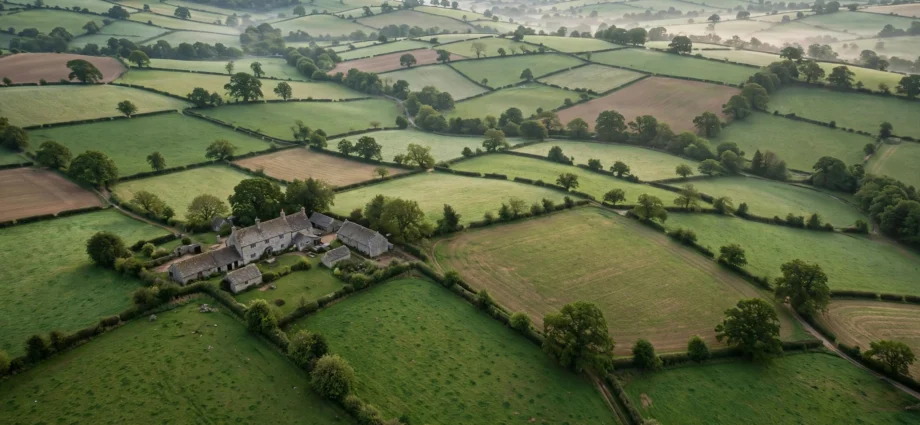
The UK countryside attracts overseas buyers for many reasons: rolling pasture, heritage estates, privacy, and a land market with a centuries old reputation for security. For many international buyers, a farm, a stretch of arable land or a rural estate with acreage is the most appealing way into the British property market. But the rules that govern farmland differ in important ways from those that apply to a London flat or a suburban house.
This guide answers the key question foreign buyers ask: can a foreigner buy agricultural land in the UK, and if so, how? It covers ownership restrictions (or the lack of them), the legal difference between buying as an individual and through an overseas company, planning and use classes, a plain English summary of the tax position, and a step by step buying process designed for non-resident buyers.
The short answer: yes, foreigners can buy agricultural land in the UK. There are no nationality based restrictions in England, Wales, Scotland or Northern Ireland, and you need no visa, residency or government permission. Overseas companies must register with Companies House first. Farmland itself is taxed at lower non-residential stamp duty rates.
Can a Foreigner Buy Farmland in the UK?
Yes. Unlike many countries in Europe, the UK places no nationality based restrictions on who can own land. A buyer from the United States, the Middle East, Asia or anywhere else is treated the same as a British buyer when purchasing farmland. You do not need a UK visa, British residency or any form of government consent to buy agricultural land in your own name.
This is a genuine distinction. Countries such as France and Germany operate pre-emption rights and buyer qualification rules that favour working farmers, and several EU states restrict or screen farmland purchases by non-residents. Research by the Scottish Land Commission has noted that the purchase of Scottish land by foreigners is not restricted, a position that stands apart from regimes elsewhere. In the UK, an overseas passport changes almost nothing about your legal right to own the land.
What does change for foreign buyers is the administrative and tax detail. Anti money laundering checks apply to every buyer and tend to be more thorough for overseas clients, solicitors will need to verify your identity and the source of your funds, and there are tax rules that apply differently to non-resident owners. Buying through a foreign company adds a formal registration requirement explained below.
Buying as an Individual vs Buying Through an Overseas Company
Most foreign buyers of UK farmland fall into one of two categories, and the route you choose affects your paperwork.
Buying in your own name
If you buy as a private individual, the process is the same as for a British citizen. You instruct a solicitor or licensed conveyancer, they carry out searches and register your ownership with the relevant land registry (HM Land Registry in England and Wales, the Registers of Scotland, or Land Registers Northern Ireland). No nationality declarations or special approvals are required.
Buying through an overseas company
Many international buyers prefer to hold land through a company for privacy, succession or structuring reasons. Under the Economic Crime (Transparency and Enforcement) Act 2022, overseas entities that buy, sell, lease or transfer land in the UK must register with Companies House on the Register of Overseas Entities and declare their registrable beneficial owners. On registration you receive a unique Overseas Entity ID, which you must supply to the land registry whenever the entity deals with UK land. Failure to comply can lead to fines, imprisonment, and restrictions on buying, selling or leasing the land.
If you plan to buy through an offshore or foreign company, build the registration step into your timeline. UK based verifiers handle the identity checks required, and your solicitor will confirm that the entity ID is in place before exchange of contracts.
Planning Permission and Agricultural Use Classes: What the Land Can Legally Be Used For
Agricultural land is designated for agricultural use. That simple fact catches out many foreign buyers, because what looks like an open field on a sales brochure comes with strict rules about what you can and cannot do on it.
- Farming and grazing are permitted without any change of status. Cropping, livestock grazing, haymaking and orchards all fall within normal agricultural use.
- Change of use needs permission. Converting fields to equestrian use, camping, commercial recreation or a garden attached to a new dwelling usually requires a change of use approved by the local planning authority.
- Farm buildings are not automatic. Some agricultural buildings can be erected under permitted development rights, but stables, barns for commercial use and other structures may still require full planning consent depending on size, location and the council.
- Building a house is the hardest test. You cannot simply build a home on farmland. New dwellings in the open countryside are refused unless the application meets strict rural exceptions, such as a proven essential need for a full time agricultural worker to live on site.
- Environmental and heritage overlays apply. Land within national parks, areas of outstanding natural beauty, conservation areas, or carrying listed buildings faces extra controls. Check designations before offering.
Before you commit, ask your solicitor to confirm the registered use, any existing planning consents or restrictions, rights of way across the land, and whether any part is tenanted. Agricultural tenancies in England and Wales can run for years and are legally protected, a sitting tenant continues after the sale.
The Purchase Process: Step by Step for Overseas Buyers
- Find the land through a specialist agent. Farmland is rarely sold like houses on the open market. Most parcels are sold through rural property agents or land auctions. Specialist rural agents handle the majority of farm and estate sales and also broker private, off market deals.
- Appoint a solicitor before you offer. Ideally a solicitor experienced in rural conveyancing. They will handle searches, title checks, tenancy review and registration, and they can advise on the overseas entity registration if you are buying through a company.
- Agree terms and instruct a surveyor or valuer. Rural land valuation depends on soil quality, drainage, access, development potential and local comparable sales. A professional valuation protects you from overpaying for land whose potential is limited by planning rules.
- Complete due diligence. Your solicitor checks the title, boundaries, rights of way, agricultural tenancies, planning history, environmental designations and any charges or restrictions. For overseas buyers, identity verification and source of funds checks run alongside this stage.
- Register the overseas entity if applicable. If buying through a foreign company, complete Companies House registration and obtain the Overseas Entity ID before exchange.
- Exchange contracts. In England and Wales, exchange makes the deal legally binding and you pay a deposit, typically around 10 percent. In Scotland, the missives process works differently but the principle is the same: get your solicitor to confirm when you are legally committed.
- Pay stamp duty and complete. File and pay the relevant property transaction tax (Stamp Duty Land Tax in England and Northern Ireland, Land and Buildings Transaction Tax in Scotland, Land Transaction Tax in Wales) within the filing deadline.
- Register ownership. Your solicitor registers the transfer with the land registry, and you receive title to the land.
Tax Notes for Non-Resident Farmland Buyers
Tax is where professional advice matters most, because the details turn on your residency, how you hold the land and what you do with it. The notes below are a starting map, not a substitute for advice from a UK tax adviser.
- Stamp duty is charged at non-residential rates. Pure agricultural land with no dwellings is classified as non-residential for Stamp Duty Land Tax in England and Northern Ireland. The current rates are zero on the portion up to £150,000, 2 percent on the portion from £150,001 to £250,000, and 5 percent on the portion above £250,000. These are considerably lower than residential rates. Farms sold with a farmhouse are treated as mixed use and the non-residential rates generally apply to the whole transaction, though the detail depends on the facts. Scotland and Wales run separate transaction taxes with their own thresholds.
- The non-resident surcharge targets residential property. The 2 percent non-resident surcharge that applies to residential purchases in England and Northern Ireland does not apply to bare agricultural land, because that surcharge sits on top of residential rates only.
- Rental and farming income is taxable in the UK. If you let the land or run a farming business on it, the income is subject to UK tax whether you are resident or not.
- Capital gains tax applies on sale. Non-resident owners of UK land are within UK capital gains tax on disposals of UK property and land, so factor this into your investment calculations.
- Inheritance tax is a UK-wide consideration. UK situated land generally falls within the UK inheritance tax net regardless of your residence or domicile. Historically, agricultural property relief could shelter working farmland, but the relief rules are subject to reform, so take current advice before relying on them.
Because farmland tax interacts with residency, domicile and holding structure, build a tax adviser into your team at the same time as your solicitor, not after exchange.
What Kind of Agricultural Land Can You Buy?
The UK farmland market offers several distinct types of holding, each with a different buyer profile.
| Land type | Typical use | Who it suits |
|---|---|---|
| Arable land | Cropping, cereals, vegetables | Investors seeking productive farmland or contract farming arrangements |
| Permanent pasture | Grazing, livestock, hay | Buyers wanting lower intensity land, often with equestrian potential subject to consent |
| Woodland | Forestry, conservation, amenity | Buyers interested in timber, carbon or long term natural capital plays |
| Land with a farmhouse | Mixed residential and agricultural | Lifestyle buyers wanting a country home with acreage; mixed use stamp duty treatment |
| Whole farms and estates | Working farm businesses | Serious investors and lifestyle buyers; often sold with cottages, barns and sporting rights |
Lifestyle buyers should be realistic about planning. A pretty field does not automatically become a smallholding with a home. If your goal is a country residence with land rather than a working farm, you may find more value in established luxury estates that already combine a house with acreage, where the residential use is settled and the planning risk is behind you. Location matters too: land values and planning attitudes vary widely between counties, so review our guide to the best UK areas for luxury estates before narrowing your search.
Common Mistakes Foreign Buyers Make
- Assuming they can build on it. Planning permission for new rural homes is hard won. Never price land on the assumption that consent will follow.
- Skipping the tenancy check. Land sold subject to an agricultural tenancy may not be vacant for years. Confirm vacant possession in writing.
- Underestimating due diligence costs. Searches, valuations, surveys and rural legal advice add up. Budget for them before you offer.
- Buying through an unregistered overseas company. Without the Overseas Entity ID, the land registry cannot complete the registration.
- Ignoring access and services. Check legal access rights, water supply, drainage and whether the land is landlocked. Remote parcels can have expensive infrastructure gaps.
- Treating farmland as a passive investment without advice. Returns depend on commodity prices, subsidies, environmental schemes and tax treatment. Model them with a rural adviser before committing capital.
FAQs
Can foreigners buy agricultural land in the UK?
Yes. The UK places no nationality based restrictions on farmland ownership, so overseas buyers can purchase agricultural land on the same terms as British citizens, with no visa, residency or special permission required.
Do I need UK residency or a visa to buy farmland?
No. There is no requirement to live in the UK, hold a UK visa or be a British citizen in order to buy agricultural land. You will, however, need to pass identity and anti money laundering checks with your solicitor.
Can an overseas company buy UK farmland?
Yes, but the company must first register with Companies House on the Register of Overseas Entities and obtain an Overseas Entity ID, which is supplied to the land registry on purchase. This applies to land in England and Wales, Scotland and Northern Ireland.
How much stamp duty do I pay on agricultural land?
In England and Northern Ireland, bare agricultural land is taxed at non-residential Stamp Duty Land Tax rates: zero up to £150,000, 2 percent on the portion from £150,001 to £250,000, and 5 percent above £250,000. Farms sold with a farmhouse are generally treated as mixed use and taxed at the non-residential rates. Scotland and Wales have their own transaction taxes.
Can I build a house on agricultural land I buy?
Not without planning permission, which for new homes in the open countryside is granted only in limited circumstances, such as a proven need for an agricultural worker to live on site. Never buy farmland on the assumption that building consent will be approved.
Can I use farmland for horses or leisure without permission?
Equestrian use, camping and most commercial recreation count as a change of use from agriculture and normally require planning permission from the local authority. Casual grazing of horses within normal agricultural use is generally less problematic, but check with the council before committing.
Is UK farmland a good investment for a foreign buyer?
It can be, for buyers with a long horizon. Farmland is a finite asset with historically resilient values, and it can generate income from farming, forestry or environmental schemes. But returns depend on commodity prices, policy and tax treatment, so take advice from a rural surveyor and a tax adviser and never treat projected planning uplift as guaranteed.