
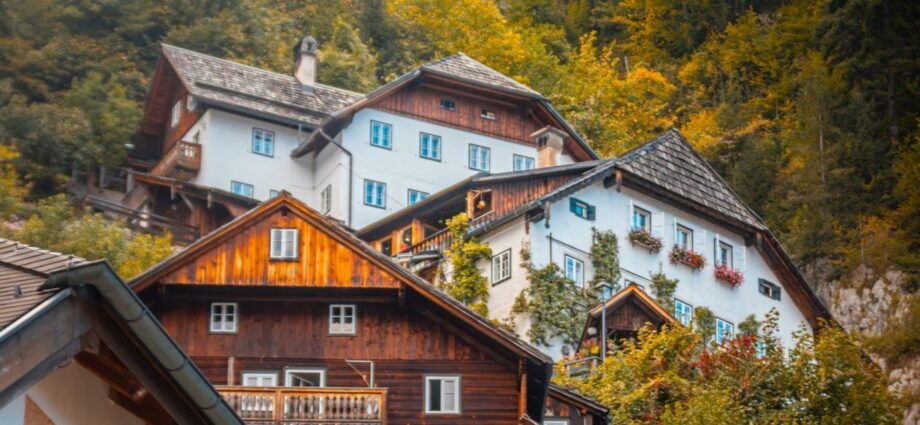
UK buyers are third-country nationals under Austrian property law, and most of Austria’s nine provinces require them to obtain provincial approval, a Grundverkehrsgenehmigung, before a purchase can be registered. Unlike Switzerland’s Lex Koller, Austria has no single national quota system, but the rules vary sharply by province, and one restriction in particular, on how a property can be used, trips up more foreign buyers than the approval process itself.
Why Austria Regulates Foreign Property Buyers
Land transfer law in Austria is a regional rather than a federal competence, so each of the nine provinces runs its own Grundverkehrsgesetz. EU, EEA and Swiss nationals are generally treated the same as Austrian citizens and do not need special permits, though they still have to observe regional rules such as restrictions on holiday homes in tourist areas. UK nationals lost this equal treatment after Brexit and are now assessed as third-country buyers everywhere in Austria, which means the approval process below applies regardless of which province they are buying in.
The Grundverkehrsgenehmigung: What Approval Actually Requires
Third-country buyers typically need to show a valid residence permit and demonstrate a genuine social or economic interest in the property, rather than a purely speculative purchase, before a provincial land-transfer authority, the Grundverkehrsbehörde, will approve the transaction. Ownership only passes once the district court enters the new owner in the Grundbuch, the land register, and this registration is blocked until approval has been granted. As of January 2026, official federal guidance has standardised the sequencing across all nine provinces: the permit application must be submitted before or at the same time as contract signing, not afterwards.
Processing speed and difficulty vary considerably by province. Vienna runs the most accessible regime, with applications handled by the MA35 authority and typical processing of six to twelve weeks. Rural and alpine provinces tend to apply more scrutiny, particularly where tourism pressure on housing stock is a political concern.
The Restriction That Catches Buyers Out: Permitted Use
Approval to buy is not the same as approval to use the property however you like. In Tyrol and Salzburg specifically, many properties are zoned for use as a primary residence only, meaning the owner cannot legally use it as a second home or holiday property even after the purchase itself has been approved. In parts of Tyrol, this is formalised through a Freizeitwohnsitzerklärung, a leisure-residence declaration required under the Tyrolean Land Transfer Act, and properties without lawful leisure-residence status generally cannot acquire it retroactively, which means buyers end up competing for a limited pool of grandfathered resale properties that already carry this status, at a real premium over otherwise comparable homes.
Enforcement is active rather than theoretical. Municipalities cross-check utility usage, postal records and physical occupancy to identify undeclared leisure use, and using a property as an undeclared second home is an administrative offence that can carry significant fines and, in serious cases, civil rescission of the purchase. A buyer intending to use an Austrian property as a ski chalet or occasional retreat, rather than a full-time residence, needs to confirm the specific zoning and leisure-residence status of that individual property before making an offer, not assume it based on the general area.
Does Buying Through a Company Avoid the Restrictions?
No. Some non-EU buyers purchase through an Austrian GmbH, and this can simplify specific aspects of a transaction, but it does not bypass Grundverkehrsgesetz requirements. Austrian law firms are clear that provincial land-transfer rules apply to share acquisitions in a property-holding company just as they apply to a direct purchase, so a corporate structure adds maintenance costs and corporate tax obligations on top of the same underlying approval requirement, rather than avoiding it.
Financing an Austrian Property as a UK Buyer
Austrian banks do lend to foreign buyers, but third-country nationals typically need a larger deposit than EU applicants, generally in the region of 25 to 40 percent of the purchase price, alongside a stable residence permit and, in most cases, income earned within Austria or the EU. Since the repeal of the KIM-Verordnung lending regulation in mid-2025, the previous statutory 20 percent minimum equity requirement is no longer mandatory in law, though individual banks continue to apply their own, often stricter, criteria in practice. A buyer with no existing Austrian credit history is generally advised to open a local account well ahead of any mortgage application, since lenders weigh this history noticeably in their assessment.
Worked Example: Total Cost of an Austrian Purchase
On a 1,000,000 euro property, a UK buyer should budget for property transfer tax of roughly 3.5 percent, Grundbuch registration fees around 1.1 percent, notary fees typically between 2,000 and 4,500 euros on a purchase this size proportionally scaled, and broker fees commonly in the 3 to 3.6 percent range where an agent is involved. Combined, total closing costs on a 1,000,000 euro purchase typically land somewhere between roughly 8 and 10 percent of the price, before legal fees, which should be budgeted separately and confirmed with an Austrian lawyer before exchange.
How This Compares with Switzerland and Germany
UK buyers researching luxus immobilien across the DACH region should understand that the three countries sit on a genuine spectrum of restriction. Germany places no general restriction on foreign residential ownership at all. Austria sits in the middle, with provincial approval required for third-country buyers but no national quota, and the real practical risk concentrated in permitted-use rules rather than the approval itself. Switzerland is the most restrictive of the three, with a national quota system under Lex Koller that caps non-resident purchases nationally, not just province by province. A buyer open to any of the three countries who is specifically drawn to alpine or ski property, rather than a city apartment, will find Austria’s rules the most navigable of the two restricted markets, provided the permitted-use position on a specific property is confirmed before an offer is made.
Practical Steps Before You Offer
- Confirm your intended use first. Deciding whether the property will be a primary residence or an occasional second home changes which properties are realistically available to you, particularly in Tyrol and Salzburg.
- Check the Flächenwidmungsplan or Bebauungsplan for the specific property with the local municipality, since this land use plan confirms the zoning classification and any leisure-residence status.
- Submit the Grundverkehrsgenehmigung application before or alongside signing, not after, since delayed applications can hold up the whole transaction.
- Open an Austrian bank account early if financing locally, since a lack of Austrian credit history is a common reason foreign applications take longer than expected.
- Instruct an Austrian lawyer experienced with third-country buyers in the specific province you are targeting, since provincial variation means experience in Vienna does not necessarily transfer to Tyrol.
Frequently Asked Questions
Can UK citizens buy property in Austria after Brexit?
Yes, but UK citizens are treated as third-country nationals rather than EU citizens, which means most provinces require approval from the regional Grundverkehrsbehörde before the purchase can be registered.
Do all nine Austrian provinces apply the same rules to foreign buyers?
No. Each province runs its own Grundverkehrsgesetz. Vienna applies the most accessible process, while alpine provinces such as Tyrol and Salzburg apply additional restrictions, particularly around leisure-residence use.
Can a UK buyer use an Austrian property as a holiday home?
It depends on the specific property’s zoning. In Tyrol and Salzburg particularly, many properties are designated for primary residence use only, and using one as an undeclared second home is an administrative offence with real enforcement risk.
Does buying through a company avoid Austria’s foreign buyer restrictions?
No. Grundverkehrsgesetz requirements apply to share acquisitions in a property-holding company in the same way they apply to a direct purchase, so a company structure adds cost without avoiding the approval requirement.
How much deposit do foreign buyers need for an Austrian mortgage?
Third-country nationals typically need a deposit in the region of 25 to 40 percent of the purchase price, alongside a stable residence permit and generally income earned within Austria or the EU.
Written and reviewed by the My Luxury Property editorial team, who research premium property markets across Europe to help buyers compare locations and legal requirements before they commit. This article is for general information only and is not legal advice. Have a question about buying in Austria? Get in touch with us here.