
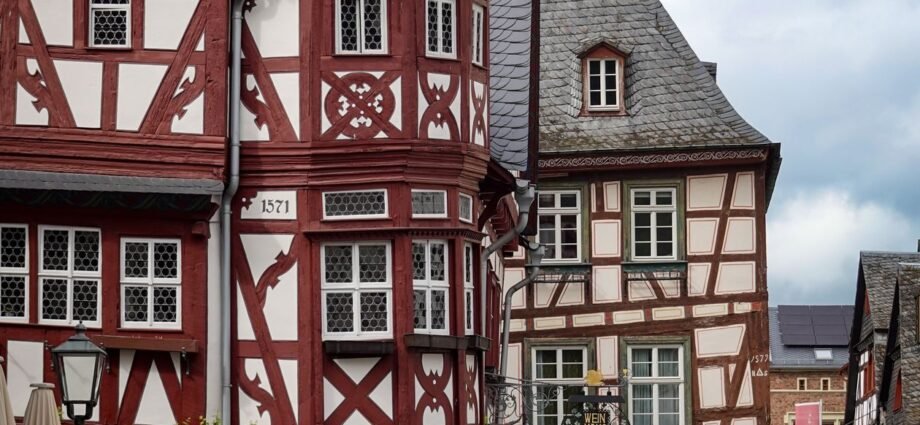
Germany places no general restriction on foreign ownership of property, unlike Switzerland’s Lex Koller or Austria’s provincial approval system, but buyers still face a meaningful tax bill: a one-off transfer tax of between 3.5 and 6.5 percent depending on the state, plus an annual property tax, and a potentially significant capital gains charge if the property is sold within ten years.
What taxes do foreign buyers pay on German property? Foreign buyers of German property pay Grunderwerbsteuer, a one-off transfer tax of 3.5 to 6.5 percent depending on the state, plus annual Grundsteuer property tax. Selling within ten years triggers Spekulationssteuer, taxing the gain at personal income tax rates up to 45 percent.
No Ownership Restrictions, But Real Costs
Unlike its DACH neighbours, Germany does not require foreign buyers to obtain approval before purchasing residential property, and there is no nationality-based restriction or quota system. This makes Germany the most straightforward of the three DACH markets to buy into from an approvals standpoint, which is part of why UK buyers already comparing Switzerland’s Lex Koller restrictions or Austria’s Grundverkehrsgenehmigung process often find Germany the more accessible starting point. The tradeoff is that Germany’s tax burden, spread across purchase, ownership, and eventual sale, is not lighter simply because the approval process is. Read our Swiss property rules compared guide before choosing between the two markets.
Grunderwerbsteuer: The Transfer Tax You Pay on Purchase
Germany’s real estate transfer tax, Grunderwerbsteuer, is a one-off charge due shortly after signing the notarised purchase contract, and it is set independently by each of Germany’s 16 federal states rather than nationally. Rates currently range from 3.5 percent in Bavaria, the lowest in the country, up to 6.5 percent in Brandenburg, North Rhine-Westphalia, Saarland, Schleswig-Holstein, and Thuringia. Most other states sit at 5 to 6 percent. Crucially, this rate applies equally regardless of the buyer’s nationality or residency status, so a UK buyer pays exactly the same rate as a German resident buying the same property.
On a €3,000,000 property, this single tax alone ranges from €105,000 in Bavaria to €195,000 in North Rhine-Westphalia, a €90,000 swing purely based on which state the property sits in. Location decisions for a German luxury purchase should factor this in from the outset, not as an afterthought once a favourite property has already been chosen. For UK buyers weighing Germany against other options, France carries its own distinct tax, the IFI wealth tax on real estate, which does not have a direct equivalent in Germany.
Grundsteuer: The Annual Property Tax
Separately from the one-off transfer tax, Germany charges an ongoing annual property tax, Grundsteuer, calculated using the property’s assessed value and a local municipal multiplier that varies significantly by location. Germany reformed how this assessed value is calculated in 2025, aiming for more transparency, though the multiplier that municipalities apply on top still varies considerably. For context, typical annual charges on standard residential property often fall in a relatively modest range, but luxury property in high-value municipalities can sit well above that, and an exact figure should always be confirmed with a local Steuerberater, a German tax adviser, before purchase.
Spekulationssteuer: The Ten-Year Rule Luxury Buyers Need to Know
Germany’s speculation tax is the single most important planning point for a UK buyer considering a German property as anything other than a very long-term hold. If a privately owned property is sold within ten years of purchase, any gain is taxed at the seller’s personal income tax rate, which reaches 45 percent at the top German bracket for high earners, rather than at a lower, separate capital gains rate.
This ten-year clock is a genuine planning constraint. A buyer purchasing a German luxury property as a medium-term investment, rather than a long-term family home, should model the after-tax outcome of selling before year ten against holding past it, since the difference in tax treatment either side of that date is substantial. An exemption generally applies where the property has been used as the owner’s own home for the two years before sale, which matters for buyers intending genuine personal use rather than pure investment.
Notarisation: A Legal Requirement, Not a Formality
Every German property purchase must be notarised by a Notar, a legal requirement with no exception, unlike the UK where a solicitor handles conveyancing without this specific step. The Notar is a neutral party, not acting for either buyer or seller specifically, and their role includes preparing the purchase contract and registering the transfer in the Grundbuch, the German land register, where ownership formally passes. Notary fees typically run around 1 to 1.5 percent of the purchase price.
Total Closing Costs: What to Actually Budget
Adding Grunderwerbsteuer, notary fees, land registry fees, and any agent commission together, total closing costs on a German property purchase typically land between 7 and 12 percent of the purchase price, with the exact figure driven mainly by which state the property is in and whether an agent was involved.
| Cost | Typical Range |
|---|---|
| Grunderwerbsteuer (transfer tax) | 3.5% to 6.5%, by state |
| Notary fees | Approximately 1% to 1.5% |
| Land registry (Grundbuch) fees | Approximately 0.5% |
| Agent commission (if applicable) | Up to 3.57% including VAT, typically split between buyer and seller since 2020 reforms |
Financing a German Property as a UK Buyer
German banks do lend to foreign buyers, though non-resident buyers typically face larger deposit requirements than German residents, often in a similar range to the deposits UK buyers encounter when financing property in Austria. Opening a German bank account and establishing some local financial history ahead of a mortgage application tends to smooth the process, similarly to practice elsewhere in the DACH region. For the full purchase process, see our guide to buying luxury property in Germany.
Does Buying Property Grant Residency?
No. Unlike some countries that have historically offered residency-by-investment routes, owning German property does not itself grant any right to live in Germany. A UK buyer wanting to spend extended time at a German property needs to arrange the appropriate visa or residency route separately through German immigration authorities, entirely independent of the property purchase.
Frequently Asked Questions
Can UK citizens buy property in Germany without restrictions?
Yes. Germany places no general restriction on foreign ownership of residential property and requires no approval process, unlike Switzerland or Austria.
How much is property transfer tax in Germany?
Grunderwerbsteuer ranges from 3.5 percent in Bavaria to 6.5 percent in states such as Brandenburg and North Rhine-Westphalia, applying equally regardless of the buyer’s nationality. (Saxony, previously listed here at 3.5 percent, is now 5.5 percent.)
What happens if I sell a German property within ten years?
Any gain is generally taxed at your personal income tax rate, up to 45 percent for high earners, under the Spekulationssteuer rule, unless the property was used as your own home for the two years before sale.
Does buying property in Germany grant a residence permit?
No. Property ownership does not grant any right to reside in Germany. A separate visa or residency application is required through German immigration authorities.
What are the total closing costs on a German property purchase?
Typically 7 to 12 percent of the purchase price, covering transfer tax, notary fees, land registry fees, and agent commission where applicable, varying mainly by state.
Written and reviewed by the My Luxury Property editorial team, who research premium property markets across Europe to help buyers compare locations and legal requirements before they commit. This article is for general information only and is not tax or legal advice; see our disclaimer for details. Have a question about buying in Germany? Get in touch with us here.
Germany Property Transfer Tax Rates by State: The Full Table
Because Grunderwerbsteuer is set by each federal state, the rate on an identical property can differ by three full percentage points depending on location. The table below shows the current rate in each of Germany’s 16 states, with what each rate means in euros on a €3,000,000 purchase.
| State | Rate | Tax on €3,000,000 |
|---|---|---|
| Baden-Württemberg | 5.0% | €150,000 |
| Bavaria | 3.5% | €105,000 |
| Berlin | 6.0% | €180,000 |
| Brandenburg | 6.5% | €195,000 |
| Bremen | 5.0% | €150,000 |
| Hamburg | 5.5% | €165,000 |
| Hesse | 6.0% | €180,000 |
| Mecklenburg-Vorpommern | 6.0% | €180,000 |
| Lower Saxony | 5.0% | €150,000 |
| North Rhine-Westphalia | 6.5% | €195,000 |
| Rhineland-Palatinate | 5.0% | €150,000 |
| Saarland | 6.5% | €195,000 |
| Saxony | 5.5% | €165,000 |
| Saxony-Anhalt | 5.0% | €150,000 |
| Schleswig-Holstein | 6.5% | €195,000 |
| Thuringia | 6.5% | €195,000 |
Note that Saxony raised its rate from 3.5% to 5.5%, so Bavaria is now the only state still at 3.5%. State rates can change, so confirm the current rate for your state with a local Steuerberater before budgeting.
Spekulationssteuer Explained: How the Gain Is Calculated and Who Pays
Spekulationssteuer is not a separate tax with its own rate. It is the application of Germany’s personal income tax to the profit on a property sold within ten years of purchase. Understanding how that gain is calculated matters as much as the headline rate.
How the gain is calculated. The taxable gain is broadly the sale price minus the original purchase price, minus acquisition costs (including the Grunderwerbsteuer, notary, and agent fees paid when buying) and minus the costs of selling. Improvements that increase the property’s value can generally be deducted; routine repairs and maintenance cannot. Keep every invoice from purchase through sale. The gain is only as accurate as your documentation.
The owner-occupation exemption. No speculation tax is due if the property was used as the owner’s own residence throughout the period between purchase and sale, or at minimum during the year of sale and the two preceding calendar years. This is the exemption that matters most for genuine second-home buyers: a UK buyer who actually lives in the German property for the required period before selling escapes the charge entirely, even within the ten-year window.
How non-residents are affected. The ten-year rule applies to non-resident sellers in exactly the same way as to German residents. There is no reduced rate or exemption based on living abroad. A UK buyer who lets the property or leaves it empty and sells within ten years faces the full income-tax treatment on the gain.
Double-taxation note. The UK-Germany double-taxation treaty means tax paid in Germany on the gain can generally be credited against any UK tax due on the same gain, so the same profit is not taxed twice in full. But the interaction is not automatic. The UK taxes non-resident property disposals under its own rules, and the timing and calculation differ. Take advice in both countries before selling.
After ten years. Once the ten-year holding period has passed, a private sale is generally tax-free in Germany regardless of the size of the gain. This is the single brightest line in German property tax planning, and the reason long-term holders face a very different outcome from medium-term sellers.
Total Closing Costs and the Nebenkosten Cash Requirement
Total closing costs on a German purchase, the Nebenkosten, typically land between 7 and 12 percent of the purchase price. On a €3,000,000 property that means budgeting €210,000 to €360,000 above the price itself, driven mainly by the state’s Grunderwerbsteuer rate and whether an agent commission applies.
German banks do not finance the Nebenkosten. This is the point foreign buyers most often miss. German mortgage lenders typically lend against the property value (the Kaufpreis) and expect the buyer to pay all closing costs, transfer tax, notary, land registry, and agent fees, from cash. On a €3,000,000 purchase at 80% loan-to-value, for example, the buyer needs roughly €600,000 as a deposit plus another €210,000 to €360,000 in cash for the Nebenkosten: total cash required of €810,000 to €960,000 before the purchase even completes. UK buyers accustomed to rolling fees into a mortgage should reset that expectation entirely.
Germany Property Tax FAQs: Rates, Spekulationssteuer and Closing Costs
What is the Grunderwerbsteuer rate in each German state?
Rates range from 3.5% in Bavaria to 6.5% in Brandenburg, North Rhine-Westphalia, Saarland, Schleswig-Holstein, and Thuringia, with most other states at 5 to 6%. Saxony is 5.5%. See the full 16-state table above.
How is the Spekulationssteuer gain calculated?
The taxable gain is broadly the sale price minus the purchase price and deductible acquisition, improvement, and sale costs. It is then taxed at your personal income tax rate (up to 45%) if you sell within ten years. See the full explainer above.
Does the ten-year rule apply to non-resident sellers?
Yes. Non-residents face exactly the same ten-year rule and income-tax treatment as German residents. The owner-occupation exemption (own home in the year of sale and two preceding years) is the main way out within the window.
Will I be taxed twice on a German property gain as a UK resident?
Generally no. The UK-Germany double-taxation treaty allows tax paid in Germany to be credited against UK tax on the same gain, but the calculations and timing differ. Take advice in both countries before selling.
Do German banks finance the Nebenkosten closing costs?
No. German lenders expect buyers to pay all closing costs, transfer tax, notary, land registry, and agent fees, from cash, on top of the deposit. Budget 7 to 12% of the purchase price in cash for the Nebenkosten.